
If you are searching for the best IPTV service in 2026, you are probably looking for a convenient way to watch live television, sports, news, entertainment, and on-demand content over the internet. IPTV has become an increasingly important part of the modern television landscape, giving viewers more flexibility than traditional broadcast and cable models.
But finding the best IPTV service is not simply about choosing the provider with the biggest channel list or the lowest subscription price. A good IPTV experience depends on several factors, including content rights, streaming quality, device compatibility, reliability, customer support, pricing, privacy, and the quality of the underlying internet connection.
This guide explains what IPTV is, how it works, what to look for when comparing IPTV services, how 4K streaming works, which devices can support internet television, common problems, and how to identify legitimate providers.
The goal is to help you make a more informed decision instead of relying on exaggerated advertising claims.
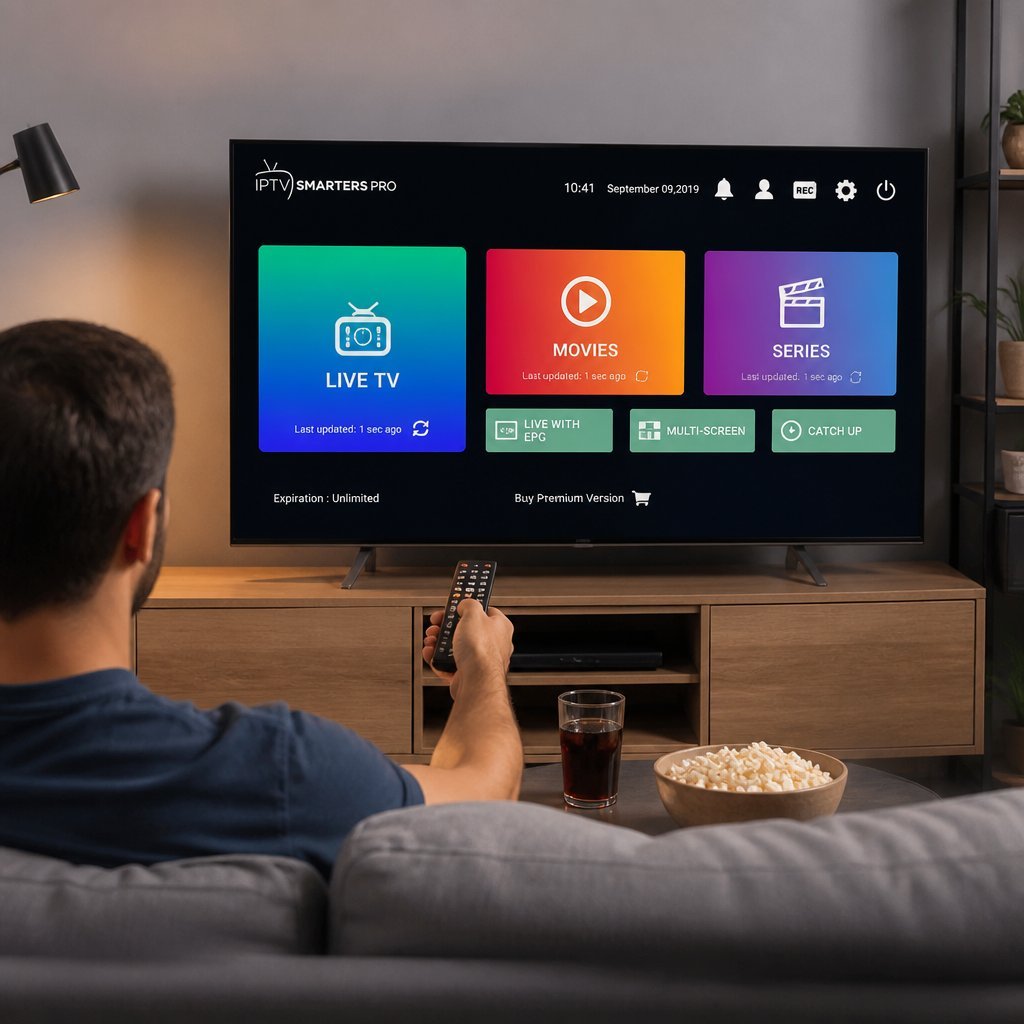
What Is IPTV?
IPTV stands for Internet Protocol Television.
Unlike traditional television systems that may rely on terrestrial broadcasting, cable networks, or satellite transmission, IPTV delivers television programming through IP-based networks.
In simple terms, IPTV allows video content to travel through an internet connection to a compatible television, streaming device, computer, smartphone, or tablet.
IPTV can include several different types of viewing:
- Live television
- On-demand movies
- Television series
- News
- Sports
- Educational programming
- International programming
- Catch-up television
- Recorded content
However, IPTV is a delivery technology, not a guarantee that every service using the technology is legitimate.
The legality of an IPTV service depends on whether it has the appropriate rights to distribute the content it offers.
This distinction is essential when researching the best IPTV options.
How Does IPTV Work?
The basic IPTV process is relatively straightforward.
A content provider obtains television programming and prepares it for digital distribution. The video is encoded and stored or transmitted through servers capable of delivering streams to viewers.
When you select a channel or program, your device requests the corresponding stream.
The server then sends video data over the internet to your device, where the application decodes the stream and displays it on your screen.
A simplified IPTV process looks like this:
Content source → IPTV platform → Internet network → IPTV application → Television or device
Several technical factors influence the final viewing experience.
These include:
- Internet speed
- Network stability
- Video bitrate
- Compression
- Server capacity
- Geographic routing
- Device performance
- Wi-Fi quality
- Video resolution
This is why two IPTV services can provide completely different experiences even when they advertise similar features.
What Makes the Best IPTV Service?
There is no single IPTV service that is automatically the best for every viewer.
The right choice depends on your viewing habits.
For example, someone primarily interested in live sports may prioritize sports availability and low streaming latency. Another person may care more about movies, international channels, DVR functionality, or smart-TV compatibility.
Nevertheless, several characteristics are common among high-quality legitimate services.
1. Reliable Streaming
Reliability should be one of your highest priorities.
A service may advertise thousands of channels, but those channels are not useful if streams frequently freeze, disconnect, or become unavailable.
A reliable IPTV platform should provide:
- Stable streams
- Consistent video quality
- Reasonable loading times
- Good server infrastructure
- Proper maintenance
- Responsive technical support
Occasional interruptions can happen with any internet service, but frequent buffering is a warning sign.
2. Legal Content Licensing
A legitimate provider should have appropriate rights to distribute the programming it offers.
Consumers should be cautious about services that promise premium channels, sports packages, and large movie libraries for unusually low prices without clearly explaining their business or content rights.
A professional IPTV provider should make its service terms reasonably transparent.
3. Good Video Quality
Video quality is another important consideration.
Modern IPTV services may offer:
- SD
- HD
- Full HD
- 4K
- HDR on selected content
However, an IPTV service advertising “4K” does not necessarily mean that every channel is available in native 4K.
Always check which specific channels or programs support higher resolutions.
4. Device Compatibility
The best IPTV service for you should work with your existing equipment.
Depending on the platform, support may include:
- Smart TVs
- Streaming boxes
- Streaming sticks
- Android devices
- iPhones and iPads
- Windows computers
- Mac computers
- Web browsers
Before subscribing, check the provider’s official compatibility information.
5. Electronic Program Guide
An Electronic Program Guide, commonly called EPG, makes live television much easier to navigate.
A useful EPG can display:
- Channel names
- Current programs
- Upcoming programs
- Program descriptions
- Start times
- Categories
Without an accurate program guide, a large channel library can become difficult to use.
6. Catch-Up Television
Catch-up functionality allows viewers to watch selected programming after it has already aired.
This is particularly useful for people who cannot always watch live television.
Availability depends on the provider and the rights associated with individual channels.
7. DVR Functionality
Some IPTV and live-TV streaming platforms provide cloud DVR functionality.
This allows users to record selected programs for later viewing.
When comparing DVR features, check:
- Storage capacity
- Recording duration
- Retention period
- Number of simultaneous recordings
- Supported channels
- Playback restrictions
8. Customer Support
Customer service can make a major difference.
Look for providers that clearly publish:
- Support contact information
- Installation guides
- Troubleshooting documentation
- Frequently asked questions
- Billing information
- Cancellation procedures
A service that provides no clear way to contact the company deserves additional scrutiny.
Best IPTV Features to Compare
When researching IPTV providers, it helps to create a comparison checklist.
| Feature | Why It Matters |
|---|---|
| Channel availability | Determines whether the service offers programming you actually watch |
| Video quality | Affects picture clarity |
| 4K support | Important for compatible UHD televisions |
| EPG | Makes live TV easier to navigate |
| DVR | Allows selected programs to be recorded |
| Catch-up | Helps viewers watch missed programs |
| Device support | Determines where you can watch |
| Reliability | Reduces interruptions |
| Customer support | Helps resolve technical issues |
| Pricing | Determines overall value |
| Licensing | Helps establish whether content is authorized |
| Privacy | Protects account and personal information |
The strongest service is usually the one that performs well across the categories that matter most to you.
Best IPTV for Live TV
Live television remains one of the biggest reasons people consider IPTV.
Internet-based live TV can provide access to different types of programming depending on the service.
Common categories include:
- News
- Sports
- Entertainment
- Lifestyle
- Movies
- Children’s programming
- Documentary channels
- Local programming
- International television
However, channel availability is highly provider-dependent.
Before paying for a subscription, make a list of your must-have channels and verify their availability directly with the provider.
Don’t assume that an advertisement showing a channel logo means the provider is authorized to distribute it.
Best IPTV for Sports
Sports viewers often have different priorities from general television viewers.
For sports, look for:
- Reliable live streams
- Low latency
- High-definition video
- 4K availability where offered
- Official rights to the competitions you want to watch
- Replay or catch-up options
- Stable performance during major events
Large sporting events can create significant demand on streaming infrastructure.
A provider may perform well under normal conditions but struggle during major events when large numbers of viewers connect simultaneously.
That makes reliability particularly important for sports fans.
Why 4K Matters for Sports
A large 4K television can make sports viewing more immersive.
Higher resolution can provide more detail in:
- Stadium scenes
- Player movement
- Field markings
- Scoreboards
- Camera shots
But the source must actually be available in 4K.
Upscaling an HD stream is not equivalent to receiving a native 4K broadcast.
Best IPTV for Movies
Movie viewers may prefer platforms that combine live television with on-demand libraries.
When evaluating an IPTV service for movies, consider:
- Video resolution
- Audio quality
- Subtitles
- Language options
- On-demand availability
- Search functionality
- Categories
- Resume playback
- Parental controls
Also verify the legal availability of the movie catalog.
A large movie library advertised at an extremely low subscription price should not automatically be considered a good deal.
Best IPTV for International Channels
IPTV can be particularly useful for viewers interested in international television.
Some legitimate services specialize in programming from specific countries or regions.
Possible categories include:
- European television
- African television
- Middle Eastern channels
- Asian programming
- Latin American channels
- International news
If international content is your priority, look for a service that clearly identifies the countries and channels it legally supports.
A smaller, specialized service can sometimes be more useful than a platform advertising an enormous but poorly organized channel catalog.
Best IPTV for Smart TVs
Smart TVs have made internet television increasingly convenient.
Modern televisions often include built-in operating systems and application marketplaces.
Depending on the manufacturer and service, IPTV viewing may involve:
- Connecting the TV to the internet.
- Opening the official application marketplace.
- Installing a compatible application.
- Signing into your legitimate account.
- Selecting live or on-demand content.
Application availability differs between television platforms.
Always verify compatibility before purchasing a subscription.
Best IPTV Devices
If your television does not support the application you need, a dedicated streaming device may provide an alternative.
Smart TVs
Advantages include:
- No extra hardware
- Integrated remote control
- Built-in Wi-Fi
- 4K support on compatible models
Streaming Sticks
Streaming sticks are compact devices that connect through HDMI.
They can be useful for upgrading older televisions.
Streaming Boxes
Streaming boxes can offer stronger processors, broader application support, and additional connectivity.
Computers
Windows and Mac computers can often access legitimate IPTV or live-TV platforms through supported browsers or applications.
Smartphones and Tablets
Mobile devices provide flexibility for watching content away from the main television.
Internet Requirements for the Best IPTV Experience
Your internet connection plays a major role in IPTV performance.
A fast connection is helpful, but stability matters too.
Potential problems include:
- Slow download speeds
- Weak Wi-Fi
- High latency
- Network congestion
- Router limitations
- ISP issues
4K streaming generally requires more bandwidth than standard HD streaming.
If multiple people in the household stream simultaneously, the total bandwidth requirement increases.
For the best results, leave some capacity available rather than running your internet connection close to its maximum speed.
Wi-Fi vs Ethernet for IPTV
Both Wi-Fi and Ethernet can work well, but wired Ethernet is often more consistent when available.
Ethernet Advantages
- Stable connection
- Lower interference
- Consistent throughput
- Useful for demanding 4K streaming
Wi-Fi Advantages
- Convenient
- No cable required
- Flexible device placement
- Suitable for many households
If your IPTV service repeatedly buffers over Wi-Fi, testing an Ethernet connection can help determine whether wireless networking is contributing to the problem.
Why Does IPTV Buffer?
Buffering can have many causes.
Slow Internet
Your broadband connection may not provide enough bandwidth for the selected stream.
Weak Wi-Fi
The connection between your router and television may be poor.
Network Congestion
Other devices can consume bandwidth.
Examples include:
- Game downloads
- Cloud backups
- Video calls
- Multiple simultaneous streams
- Large file transfers
Provider-Side Problems
The IPTV provider’s servers may be overloaded or experiencing technical problems.
Device Limitations
Older streaming hardware may struggle with high-resolution video.
Internet Routing
Traffic between your ISP and the streaming provider can sometimes encounter congestion.
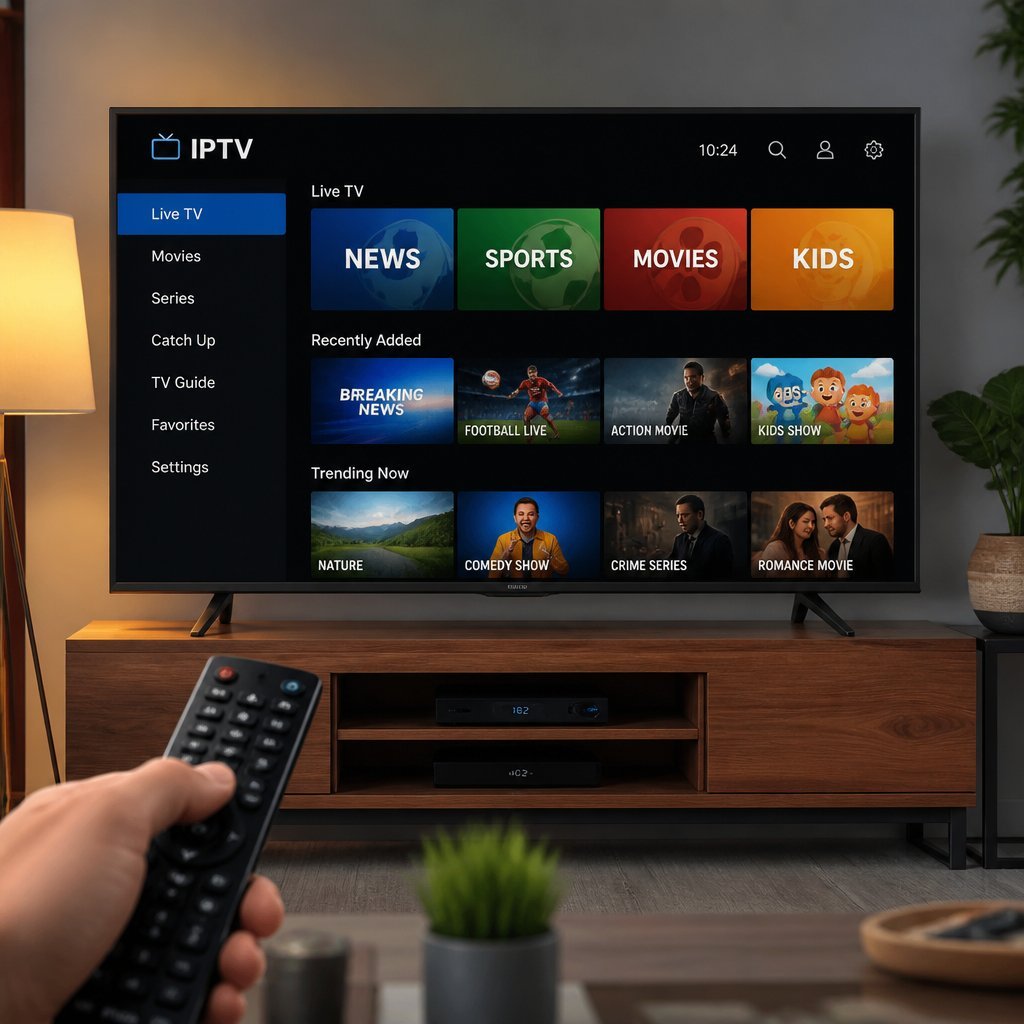
How to Improve IPTV Streaming
If you experience buffering, try these steps:
Restart the Router
Temporary networking problems can sometimes be resolved by restarting networking equipment.
Use Ethernet
A wired connection can eliminate wireless interference.
Reduce Other Traffic
Pause large downloads and unnecessary background activity.
Lower Video Quality
If your connection cannot reliably handle 4K, temporarily switching to HD may improve stability.
Update Your Device
Install available operating-system and application updates from official sources.
Contact the Provider
If other internet services work normally but one IPTV service repeatedly fails, the provider may need to investigate its infrastructure.
Is IPTV Legal?
This is one of the most important questions when searching for the best IPTV.
The IPTV technology itself is legal.
The issue is whether the provider is authorized to distribute the content.
A legitimate service should have appropriate agreements or rights for its programming.
Consumers should be cautious when a service:
- Has no identifiable business information
- Offers premium programming at an implausibly low price
- Claims access to virtually every channel worldwide
- Frequently changes website domains
- Provides unclear payment information
- Has no transparent terms
- Does not explain its content rights
The safest approach is to choose services that clearly operate as legitimate businesses and provide transparent information about their content.
How to Avoid Suspicious IPTV Services
A professional-looking website does not automatically prove legitimacy.
Before subscribing, investigate:
Business Identity
Can you determine who operates the service?
Terms and Conditions
Are the subscription conditions clearly published?
Privacy Policy
Does the provider explain how customer information is handled?
Content Rights
Does the provider clearly identify how it obtains and distributes programming?
Payment Transparency
Are prices and billing conditions clearly stated?
Customer Support
Is there a genuine way to obtain help?
Reputation
Look for independent information rather than relying exclusively on testimonials published by the provider itself.
Best IPTV vs Traditional Cable
IPTV and cable television each have advantages.
| Category | IPTV | Cable |
|---|---|---|
| Delivery | Internet | Cable network |
| Internet dependency | Usually required | Traditional TV can operate independently |
| Device flexibility | Often high | Provider-dependent |
| 4K | Provider-dependent | Provider-dependent |
| DVR | Often available | Often available |
| Installation | Often software/device-based | May require professional installation |
| Portability | Potentially high | Usually lower |
| Channel selection | Provider-dependent | Provider-dependent |
The best option depends on your household.
If you already have reliable high-speed internet and prefer flexible streaming, IPTV or live-TV streaming may be attractive.
If you prefer traditional bundled television and do not want to rely on internet connectivity for television, cable may remain appropriate.
Best IPTV vs Streaming Platforms
Modern streaming platforms have blurred the line between traditional television and IPTV.
Many legitimate platforms offer:
- Live channels
- On-demand movies
- Series
- Sports
- Cloud DVR
- Personalized recommendations
The difference is often the business model and programming rights rather than the underlying internet technology.
Consumers should therefore compare services according to what they actually watch.
How Much Does the Best IPTV Cost?
There is no universal IPTV price.
Legitimate services can have different pricing structures based on:
- Number of channels
- Content rights
- Sports packages
- DVR storage
- Number of simultaneous streams
- Video quality
- On-demand libraries
- Regional availability
A higher price does not automatically mean better quality.
Likewise, an extremely low price does not necessarily represent good value.
Consider the total package rather than the headline subscription cost.
Should You Choose Monthly or Annual IPTV Plans?
Monthly plans can reduce commitment.
They may be useful when you want to test a service before committing to a longer period.
Annual plans can sometimes provide a lower effective monthly cost, but they involve more financial commitment.
Before selecting an annual plan, carefully review:
- Refund policies
- Cancellation terms
- Service guarantees
- Billing conditions
Never assume that a longer subscription automatically provides better value.
IPTV Security and Privacy
Streaming services require users to think about account security.
When signing up, consider:
- Password strength
- Payment security
- Privacy policies
- Data collection
- Account sharing
- Application permissions
Use a unique password rather than reusing the same password across multiple websites.
Download applications from recognized official stores whenever possible.
Be particularly cautious about applications that request unnecessary permissions or direct users to suspicious websites.
Common IPTV Mistakes
Mistake 1: Choosing Only by Channel Count
A giant channel list can be misleading.
Mistake 2: Ignoring Content Rights
Legal availability should be a core consideration.
Mistake 3: Forgetting Device Compatibility
Always check whether your television or streaming device is supported.
Mistake 4: Assuming 4K Means Everything Is 4K
Only selected content may be available in native Ultra HD.
Mistake 5: Ignoring Internet Quality
A poor network can ruin an otherwise good streaming service.
Mistake 6: Buying a Long Subscription Immediately
Testing a service through a legitimate short-term option can reduce risk where available.
Mistake 7: Downloading Unknown Applications
Use official application sources whenever possible.
How to Choose the Best IPTV Service for Your Needs
Instead of asking “Which IPTV service is the best?” ask:
Which IPTV service is best for what I watch?
Use this process.
Step 1: Define Your Priorities
Decide whether you care most about:
- Sports
- Movies
- News
- International television
- 4K
- DVR
- Catch-up
- Smart-TV compatibility
Step 2: Create a Channel List
Write down your essential channels.
Step 3: Verify Availability
Check each provider’s official information.
Step 4: Compare Features
Look beyond the channel count.
Step 5: Check Device Support
Make sure your equipment is compatible.
Step 6: Review Pricing
Compare monthly and annual options.
Step 7: Examine Legitimacy
Look for transparent business and content-rights information.
Step 8: Evaluate Support
Good customer support can be invaluable when technical problems occur.
Frequently Asked Questions About the Best IPTV
What is the best IPTV service?
There is no single service that is best for everyone. The right choice depends on programming, location, device compatibility, video quality, pricing, features, reliability, and content licensing.
Is IPTV better than cable?
It depends on your needs. IPTV can provide flexibility and internet-based viewing, while cable can offer traditional television infrastructure and bundled services.
Can IPTV provide 4K?
Yes, legitimate IPTV and live-TV platforms can provide 4K content when the provider, source, device, and television support it.
Can I watch IPTV on a Smart TV?
Many legitimate IPTV and live-TV services support compatible Smart TVs. Check the provider’s official device list before subscribing.
Does IPTV require fast internet?
IPTV requires a reliable internet connection, and higher-resolution streams generally require more bandwidth.
Why does my IPTV keep buffering?
Buffering can result from weak Wi-Fi, insufficient bandwidth, network congestion, provider-side problems, or device limitations.
Is free IPTV safe?
Some legitimate free streaming services exist, but websites offering premium content for free without clear licensing should be approached cautiously.
How many channels does the best IPTV service have?
Channel quantity varies significantly. More channels do not necessarily mean better value. Focus on the channels and programming you actually watch.
Can IPTV replace cable?
For some households, a legitimate live-TV streaming service can replace traditional cable. Whether it is suitable depends on channel availability, internet reliability, pricing, and features.
Is IPTV legal in the United States?
IPTV technology is legal. Providers must have appropriate rights to distribute the content they offer. Consumers should investigate the legitimacy of individual services.
Does IPTV work without Wi-Fi?
IPTV generally requires an internet connection, but that connection can be provided through Ethernet rather than Wi-Fi.
Is 4K IPTV worth it?
It can be worthwhile if you have a large 4K television, a strong internet connection, and access to genuine 4K content. If most programming is HD, the benefits may be limited.
Best IPTV Buying Checklist
Before choosing a service, ask yourself:
- Does it offer the channels I actually watch?
- Is the content legally authorized?
- Does it support my device?
- Is 4K available where I need it?
- Does it provide a reliable EPG?
- Does it offer DVR or catch-up if I need those features?
- Is pricing transparent?
- Are cancellation terms clear?
- Does it provide customer support?
- Is there a clear privacy policy?
- Does my internet connection support the service?
- Does the provider have a recognizable business identity?
Final Thoughts: Finding the Best IPTV
Finding the best IPTV is less about finding the biggest channel list and more about finding a reliable, legitimate service that matches your viewing habits.
A good IPTV experience combines several elements: authorized programming, stable streaming, compatible devices, useful features, transparent pricing, strong customer support, and a reliable internet connection.
If you want 4K, verify that the specific programming you care about is actually available in native 4K. If you are primarily interested in sports, investigate the availability and rights for the competitions you follow. If you watch international television, confirm the exact channels and regions supported.
Most importantly, avoid choosing an IPTV provider simply because it promises an enormous number of premium channels for an unusually low price. Content licensing, security, reliability, and transparency are much more meaningful indicators of quality.
The IPTV market continues to evolve as consumers move toward internet-based entertainment. With careful research and a focus on legitimate services, viewers can find flexible alternatives to traditional television while getting the picture quality and features they expect from modern streaming.